"Only difficulty is stimulating..." - José Lezama Lima
While I as an out, black, gay man strongly endorse the general idea behind and the creation of the "It Gets Better" project and series of videos initiated by Dan Savage* to address the recent slew of suicides by bullied, harassed and violated queer and questioning youth, such as Rutgers University freshman Tyler Clementi, I have been slow in posting one, despite my acknowledging that it might prove helpful to the very few who might view it (which is why I very likely will soon post one). I feel this way in part because, based on my own life and the lives of those queer people whom I've known, I believe it isn't so much that things get better--especially if you are black, and working-class or poor, and a woman or a transgender person, and differently abled, and geographically isolated, etc.,--as it is that you get stronger. (Gukira discusses this with his inimitable brilliance on his blog.)
It's that you learn to address, rather than adapt or mould yourself to, the world's disdain for you, your invisibility and objectification, how little so many people, including loved ones who are not LGBT and some who are, really do see you or care about your existence. You learn to raise your innate antennae, sharpen and clarify your senses, develop new spiritual, psychological and emotional muscles, through your experiences, thereby allowing you then to move through the world with increasing self-awareness, resistance, confidence, joy. It may not always seem better or easier, but often it may. You can become stronger and more knowledgeable about yourself, and about others like you; you can come to see that the despair you have felt may sometimes place you right back on the edge--of something, some place, including life itself--but now you realize you are able to take a step back and turn in a different direction that will include reflection and affirmation, self-reflection and self-affirmation: and you keep on going, keep going on.
And as you keep going, you can increasingly create a life and enjoy it, shape the world around you such that you are able to experience it fully, to be present in it, connect with, understand, and love people like you and unlike you, including even people who cannot possibly imagine the worlds you're moving in, your complexities and nuances, because they cannot and do not want to see them. Because sometimes, as a result of their own limitations, they want to erase them--and you. Because you are stronger you can drop the armor you often have had to wear to protect yourself--not toss it aside, but at least step out into the world without all of it. You do not have to cry yourself to sleep. You do not have to wake worrying that, with a parent or sibling refusing to offer you the sort of unconditional love they claim they're capable of, or that the God they believe in is capable of, you are utterly alone. You do not have to feel that whenever you speak it's as if you are speaking into a void. You do not have to hide who you are, for fear of the repercussions of being yourself.
Because your strength and self-knowledge and broader knowledge have deepened, have grown richer and firmer, are available to you at all times, and will keep on becoming more so, not despite but as a result of the vicissitudes, the pain, and yes, the victories, and happinesses you experience. All of it will make you stronger if you let it, if you act upon them and make yourself stronger. Perhaps you might see this as better, and that is wonderful. But stronger, definitely, is something you can achieve, and thus, live and thrive.
--
*I want to note that my respect for Dan Savage dropped precipitously when, after the initial Proposition 8 vote in California, he rushed to lay blame at the doorstep of Black Californians. I can and do forgive all the time, and unequivocally so, but I also cannot so easily forget what was an appalling display of the most simplistic thinking and ready-at-the-drop-of-an-election racism. As studies later showed, if Black voters had not voted in that election, Proposition 8 still would have passed. Perhaps Savage later apologized, but if so, I never saw it, because I have studiously tried to stay away from his blog and columns. I also should note that his brother is a colleague of mine, and I think the world of him.
Tampilkan postingan dengan label LGBTQ. Tampilkan semua postingan
Sabtu, 16 Oktober 2010
Selasa, 31 Agustus 2010
Events from July & August, Part 5
People confronting an anti-gay protester, Jersey City Pride festival
Jersey City Pride festival
Bryant Park before a film
In Washington Square Park (this was the first time I'd been in the park since the renovations, which are still underway)
Art on the High Line, Chelsea
Wildflowers, on the High Line
The Empire State Building, from the High Line
Artwork on the High Line
Sabtu, 22 Mei 2010
Harvey Milk Day + Translation: Guillaume Dustan
Happy Harvey Milk Day!
****
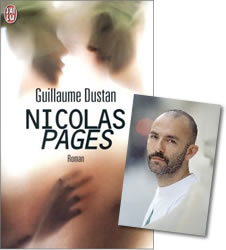
Five years back, after learning of his death, I wrote about Guillaume Dustan (1965-2005), the enfant terrible of late 20th century French gay male literature. I won't restate all of that here, except to note that around the age of 30, he began publishing a series of novels, drawn directly from his life, that placed him squarely at the center of the French autofiction movement, in which autobiography and fiction are so closely merged that they unsettle the question of genre. Dustan published 8 or 9 books, most of them fiction but several works of philosophical essays, especially on the topic of queerness, before his death, from an accidental drug overdose. He was also an editor for Balland's now extinct Rayon Gay line--which I also wrote about on here, and which is how I first learned about and had a brief email exchange with him, getting clearance for a translation--and a film producer and actor. Dustan's first three books, only one of which, Dans ma chambre (In My Room) from 1996, has been translated, are pulse-like accounts of his very active sex-and-love life, but they are also shorn of sentimentality; the concise, speedy, casual prose paints a rich picture, often full of feeling, without evoking affect in the usual ways. In 1999, he published the novel Nicolas Pages, which was somewhat of a departure. Denser, more full of anecdotes, digressions, and self-analysis and philosophizing, it takes up Dustan's pursuit of and relationship with the eponymous, younger author and conceptual artist,
Here's a little snippet from Nicolas Pages (Éditions Balland, 1999, winner of the 1999 Prix de Flore), which gives a flavor of the jagged, sometimes snaky qualities of the prose (the infelicities of the rough translation are all mine), and the self-referentiality of the narrative:
It happened like this. He was late getting to FNAC Saint-Lazare for an FG radio blah-blah with Alain Royer and Gwen Fauchois. Then we figured that he couldn't be far away, his bags were already there, set up. We had to start. I'd put on my wig, to get myself together, to make an impression too. I found it comical to put a wig to go on the radio. I took a small jog around the book display gondola--on casters--sitting at the entrance to the room (my choice: my girlfriends' gay books from the press). And then there he was. First the head and the top of his usual soft T-shirt neither too wide nor too tight, up to this point black or blue, today green, atop the black mesh. The hair was a little longer than in Liège, but still short and you could see that although he had left a longer strip, one end of the crown was higher on the right, or perhaps on the left. His eyes were still brilliant too. His face so expressive, but reserved. I also still found it gorgeous. Everything happened very quickly. I was happy to have the wig, it gave me a little distance. We got to work. I spoke about why the wig ("for a peaceful coexistence between the male and female in the same person"). He read a passage from my book, the one where I cite "Sweet Dreams." I thanked him. I read a passage from his, I don't know which one, I had just gotten up to go look for an example in the stacks he'd left here for FNAC, this cunt still hasn't faxed me his invoice sheets, it's the hugest rush right now, he's going to move to in New York on July 11th, it's June 29th now, I settle on the Mykonos trip, I read, I hear his voice speaking the text, it drives me crazy, it drives me as crazy as in Mykonos, contrary to my memory, he doesn't stop fucking, I'm jealous, I'm jealous even when he speaks about people that I do not know of, from a time when I did not know him, I am really blown away, I am serious. I said that I thought that his book was the most important book since American Psycho (besides mine, I thought). That's really what I think. He thanked me. He spoke. He only spoke of things he was sure about. I appreciated his smarts. I removed my wig so as not to hold the public's attention during his time. After, we placed his book at FNAC, while drinking champagne with Alain, Gwen and some people in the bar, nice people. Nicolas likes to drink. He drinks but he maintains control. It's because of that that I started to like him. He brought back to me my proud youth. I was someone beautiful before I lost my principles. He's handsome like a cowboy, like Rahan, like Doctor Justice (two nights later, at Dispatch, where he's at the bar, ordering—he goes all the time to order drinks and he rolls pretty good joints also, more than me but it's normal since he sees what I have to do, he says nothing. He's hovering before me, the back of his black Adidas top two centimeters above. I touch him thinking that it's maybe not a good thing. I touch him thinking that I'm against public touching, except in the case of an obvious emergency. He looks at me with an air a bit near neutral which means I'm afraid. I think about Quentin who was always feeling me up at the gallery. Nicolas is upstanding. He's 27 years old. I'm 32. We don't have the same history. But no big deal, seeing as though everyone has the same one. I hope that we'll have enough points in common. Up to the age of 24 I never made any effort. I had the power to not want to please anyone. I no longer said the obvious things. Only a half-word, if anything).
Copyright © Guillaume Dustan, from Nicolas Pages, Éditions Balland, 1999, 2010. Translation, John Keene, 2003, 2010. All rights reserved.
Senin, 17 Mei 2010
IDAHO (Int'l Day Against Homophobia and Transphobia) + Harvey Milk Week of Action in Chicago
It's May 17, which means it's also International Day Against Homophobia and Transphobia, or IDAHO. The brainchild of Dr. Louis-Georges Tin, a black gay scholar, writer and activist (with whom I conducted an interview several years back, accessible here), IDAHO began 5 years ago, after Tin began an initiative, in August 2004, to create a truly global International Day Against Homophobia. His aim was for "universal recognition" of this day, and he proposed that it be fixed on May 17, "to commemorate the World Health Organisation’s decision to remove homosexuality from the list of mental disorders." Since May 17, 2005, numerous countries and groups within those countries have called for an end to homophobia and transphobia, and a push to decriminalize "homosexuality" has also spread. The idea behind today is an important one: what would it mean to fight against fear and hatred of and end legal oppression of LGBTQ people?
Central to the logic of the day is that it is homophobia that is the problem, and should be "deconstructed in its social logic and done away with." On the map below, in countries colored blue, there have been or will be events--marches, celebrations, parades, kiss-ins, public speeches--to commemorate IDAHO.
As a cursory glance makes clear, large swathes of Africa, the Middle East and Asia have no participants in today's events. Yet we shouldn't be complacent about the US, either; over the last 10 years the focus among mainstream LGBTQ organizations has shifted to same-sex marriage and repealing Don't Ask Don't Tell (DADT). 5 US states (Massachusetts, Connecticut, Iowa, Vermont, New Hampshire) and the District of Columbia now have marriage equality laws, and the Democratic-controlled Congress's leaders, as well as the President, have expressed support for repealing DADT, though they are dragging their feet right now. Yet passing the the Employment Non-Discrimination Act (ENDA) would arguably have an even greater effect on far more LGBTQ people, since 20 states still have no protection from employment discrimination. In fact, a comprehensive civil rights bill (or Constitutional Amendment) banning all discrimination based on sexual orientation and gender identity would be even more important, since only 13 states have protections to prevent housing discrimination. Same-sex couples or gay single people still cannot adopt children in some states (such as Florida, in part based on the hateful and spurious testimony of hypocrites like George Rekers), and in other states, because of the lack of civil protections, a gay parent can lose custody of her child. Other areas rarely touched upon include discrimination by medical professionals and hospitals, and discrimation against elderly queer people in nursing homes. These are all issues that still need to be addressed, along with a more equitable economic and political system that ensures that LGBTQ people, like every other American, have opportunities for work, to make a decent living, and live and retire with dignity.
In Chicago, this is Harvey Milk Week of Action, which includes a full schedule of events, from rallies to teach-ins to flashmobs, to commemorate what would have been Harvey Milk's 80th birthday, and to also discuss and speak out against homophobia, transphobia and heterosexism both in the US and across the globe. The culminating event will be a rally at 1 pm in the Loop this Saturday, May 22, 2010, Harvey Milk Day, his birthday and the day California has designated to commemorate him.
Equality Across America has a listing of other Harvey Milk Day events across the US, so please take part if you're able to do so!
Reggie H's take on the day is up too!
Central to the logic of the day is that it is homophobia that is the problem, and should be "deconstructed in its social logic and done away with." On the map below, in countries colored blue, there have been or will be events--marches, celebrations, parades, kiss-ins, public speeches--to commemorate IDAHO.
As a cursory glance makes clear, large swathes of Africa, the Middle East and Asia have no participants in today's events. Yet we shouldn't be complacent about the US, either; over the last 10 years the focus among mainstream LGBTQ organizations has shifted to same-sex marriage and repealing Don't Ask Don't Tell (DADT). 5 US states (Massachusetts, Connecticut, Iowa, Vermont, New Hampshire) and the District of Columbia now have marriage equality laws, and the Democratic-controlled Congress's leaders, as well as the President, have expressed support for repealing DADT, though they are dragging their feet right now. Yet passing the the Employment Non-Discrimination Act (ENDA) would arguably have an even greater effect on far more LGBTQ people, since 20 states still have no protection from employment discrimination. In fact, a comprehensive civil rights bill (or Constitutional Amendment) banning all discrimination based on sexual orientation and gender identity would be even more important, since only 13 states have protections to prevent housing discrimination. Same-sex couples or gay single people still cannot adopt children in some states (such as Florida, in part based on the hateful and spurious testimony of hypocrites like George Rekers), and in other states, because of the lack of civil protections, a gay parent can lose custody of her child. Other areas rarely touched upon include discrimination by medical professionals and hospitals, and discrimation against elderly queer people in nursing homes. These are all issues that still need to be addressed, along with a more equitable economic and political system that ensures that LGBTQ people, like every other American, have opportunities for work, to make a decent living, and live and retire with dignity.
In Chicago, this is Harvey Milk Week of Action, which includes a full schedule of events, from rallies to teach-ins to flashmobs, to commemorate what would have been Harvey Milk's 80th birthday, and to also discuss and speak out against homophobia, transphobia and heterosexism both in the US and across the globe. The culminating event will be a rally at 1 pm in the Loop this Saturday, May 22, 2010, Harvey Milk Day, his birthday and the day California has designated to commemorate him.
Equality Across America has a listing of other Harvey Milk Day events across the US, so please take part if you're able to do so!
Reggie H's take on the day is up too!
Langganan:
Postingan (Atom)